
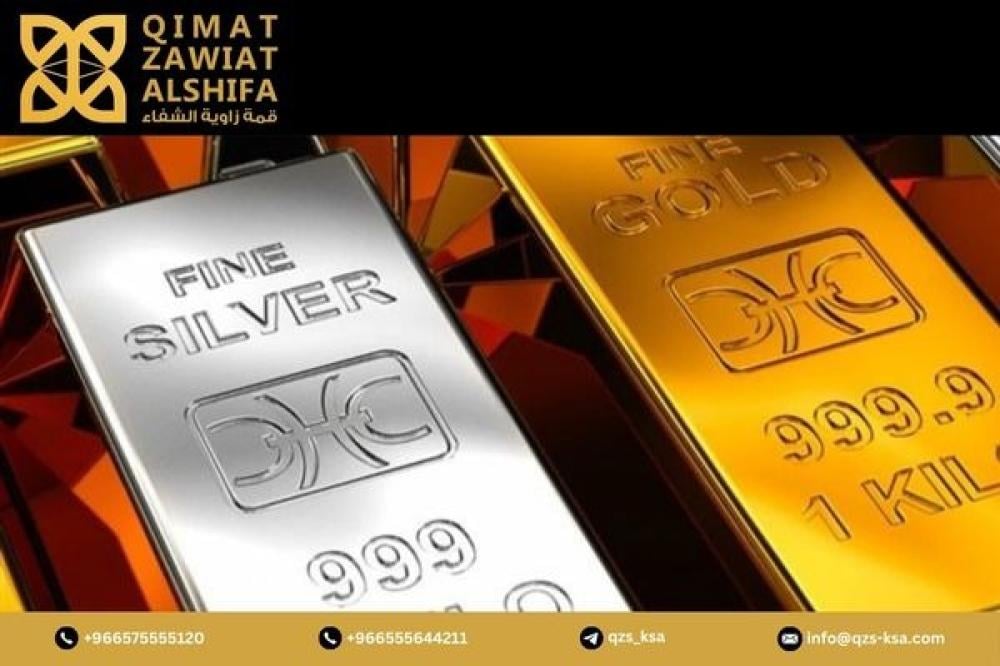
With precious metals experiencing record highs, the question of whether to invest in gold or silver is resurfacing, especially as 2026 approaches and global economic uncertainty persists. While gold continues to solidify its position as a safe haven during times of crisis and inflation, silver is establishing itself as an investment option driven by increasing industrial demand, particularly with the expansion of clean energy projects and modern technologies.
With the two metals recording high price levels, the investment decision has become more complex, and depends on the investor’s primary goal: is it to preserve value, hedge against risks, and achieve higher returns with greater volatility?
Factors affecting gold and silver prices during 2026
Gold and silver prices are influenced by a range of economic, financial, and geopolitical factors. Understanding these factors is essential for any investor seeking to make informed decisions in 2026, especially given the ongoing global volatility. A simplified explanation of the most significant influences follows:
1. Inflation and interest rates
Gold is traditionally known as a safe haven against inflation, and the reason is simple: when inflation rates rise, the purchasing power of money decreases, meaning that cash buys fewer goods over time.
Under these circumstances, investors turn to gold as a store of value, which leads to increased demand for it and a rise in its price in parallel with the general rise in prices.
The relationship between silver and inflation is more complex. Silver is widely used in various industries, including electronics, solar energy, automobiles, and medical equipment. When inflation accelerates, economic growth often slows, which can reduce industrial demand for silver, thus preventing its price from rising as it does with gold.
2- Inflation expectations for the coming period
Although inflation rates vary from country to country, the US economy remains the biggest influence on global markets, due to the strength of the dollar and the policies of the Federal Reserve.
According to the latest estimates, inflation in the United States is expected to rise slightly in the short term, from about 3.2% to around 3.4% over the next year.
Although these figures pertain to the US market, they provide an important indication of the direction of global monetary policy, particularly with regard to interest rates, which is a factor that directly affects precious metal prices.
3- The relationship between interest rates, gold, and silver
Gold and silver are classified as non-revenue assets, meaning you do not receive interest or profits simply for holding them.
Therefore, when interest rates are high, investors tend to favor yield-generating assets such as bonds and bank deposits, which reduces the appeal of metals.
During periods of low interest rates, the cost of holding gold and silver decreases, making investment in them more attractive.
This is where the concept of the real interest rate comes into play, which is the interest rate after deducting the inflation rate.
- If the real interest rate is high and positive, the attractiveness of metals decreases.
- If it is low or negative, gold in particular tends to perform strongly.
4- Central banks and interest rate cuts
The US Federal Reserve recently cut interest rates by 25 basis points, and several analysts, including JPMorgan Chase, expect further cuts in the coming period.
Gold and silver prices often begin to rise as soon as interest rate cut expectations emerge, even before the decision is actually implemented, meaning that some of these increases may have already been priced in at the markets.
Important information: Some experts indicate that gold performs best when real interest rates fall below -2%.
5. Geopolitical tensions
When geopolitical tensions escalate, conflicts erupt, or economic sanctions are imposed, investors turn to gold to protect their wealth. This was clearly demonstrated during the trade tensions between the United States and China, as well as after the outbreak of war between Russia and Ukraine, when central banks around the world rushed to increase their gold reserves at an unprecedented pace.
In some cases, central banks' gold reserves have exceeded their holdings of US Treasury bonds for the first time in decades, a clear indication of rising geopolitical risks.
However, it should be noted that this relationship is not a fixed rule; in some crises, such as the beginning of the Corona pandemic, the price of gold declined temporarily before rising again later.
As for silver, it remains more sensitive to economic conditions, as global tensions could lead to a decline in industrial demand for it, putting pressure on its prices.
6 - Declining reliance on the dollar
In the long term, some countries are moving towards reducing their dependence on the US dollar and increasing their gold holdings within their monetary reserves.
The BRICS countries (Brazil, Russia, India, China, and South Africa) are leading these trends by promoting trade in local currencies instead of the dollar, and seeking to create alternative financial systems that reduce the dominance of the US currency.
These moves could lead to a decline in demand for the dollar, which would strengthen gold's position as a global reserve asset and push its prices even higher in the long term.
in the end,
- Gold performs well during periods of high inflation, geopolitical crises, and low real interest rates.
- Silver benefits most during periods of economic growth and strong industrial demand.
- 2026 may see continued support for gold prices, while silver remains a higher-risk and more volatile option.
Investing between the allure of gold and the ambition of silver: which do you choose?
Gold is considered the traditional and most stable safe haven, characterized by relatively low price volatility compared to other metals, making it the preferred choice for hedging against inflation and financial market fluctuations. This strength stems from the enormous demand by central banks and its use as a monetary instrument and store of value, in addition to its ease of storage due to its high value relative to its weight; one kilogram is worth approximately $130,000.
With expectations of reaching $5,000 an ounce by 2026, gold remains a key pillar for investors seeking safety and portfolio diversification away from the volatility of stocks.
On the other hand, silver represents an investment that combines monetary characteristics with industrial activity, making it a double-edged sword. It is nearly twice as volatile as gold, increasing its risk but also opening up opportunities for higher returns during periods of economic growth. This is because 55% of its demand comes from vital industrial sectors such as solar energy, making its price more sensitive to the state of the global economy than to inflation alone.
However, silver investors face liquidity challenges, as its market is ten times smaller than the gold market, in addition to needing larger storage spaces and higher insurance costs due to its low value relative to weight (a kilogram is equivalent to only about $1,670).
In summary : If your goal is capital protection and long-term stability, gold is the ideal choice. However, if you have a high risk tolerance and want to capitalize on industrial booms and rapid growth, silver might be the extra engine your portfolio needs.
Advantages of investing in gold
- Diversity of investment options
- Gold offers several ways to invest, including buying physical gold such as bars, coins and jewelry, or investing through exchange-traded funds, or through shares of gold mining companies.
- Reliable stock of value
- Gold is considered a traditional store of value, as it has maintained its status over long periods of time, allowing investors to buy it, hold it, and then resell it later at a higher price in the long run.
- Diversifying the investment portfolio
- Gold helps diversify an investment portfolio and reduce risks, especially during periods of economic uncertainty or declining performance of other financial assets.
- Hedging against inflation
- Gold is used as an effective hedge against the decline in the purchasing power of paper currencies during periods of high inflation.
Disadvantages of investing in gold
- Impact of interest rates
- There is an inverse relationship between gold prices and interest rates; during periods of high interest rates, you may lose opportunities to achieve higher returns from other investment instruments such as bonds.
- Medium-term price volatility
- Gold has experienced periods of rising, falling, and stability, and an investor may incur losses if they buy at price peaks and do not hold onto it for a long period.
- Failure to generate regular income
- Gold does not generate cash flows or dividends; profits are limited to price differences only.
Advantages of investing in silver
- Multiple investment tools
Silver can be invested in by purchasing silver bullion and coins, or through exchange-traded funds such as SLV, or shares of silver mining companies.
- Easy access for investors
Because of its lower price compared to gold, silver is a suitable option for those with small capital.
- Potential for higher returns
Silver has a higher degree of volatility than gold, which increases the chances of making larger profits, while also carrying a higher level of risk.
- Link to industrial demand
Silver prices are greatly influenced by industrial demand, and their value increases as industrial and technological sectors expand.
Disadvantages of investing in silver
- Higher risk level
Sharp fluctuations in silver prices can lead to significant losses, especially in the short term.
- Reliance on industrial activity
A decline in industrial demand during periods of economic recession may lead to a decrease in silver prices.
- Lack of regular income
Like gold, silver does not provide dividends or cash flows.
Investing Wisely: Your Guide to Buying Gold and Silver
Whether you're new to investing in gold or silver or looking to diversify your portfolio, gold and silver remain among the safest and most stable assets over the long term. Regardless of where you live or the amount of capital you have available, there are numerous easy and flexible ways to invest in precious metals. Here are some of the most prominent options:
1- Purchase from local bullion dealers and authorized stores
If you prefer to actually own gold or silver, you can go to specialist bullion dealers or authorized jewelry stores to buy bullion or coins.
But before buying, it is essential to make sure that the trader is officially registered with the relevant authorities, and that the products are accompanied by certificates that show the source of the metal and its purity percentage.
Important tips before buying:
- Make sure there is a stamp indicating the degree of purity, such as 999.9 for gold and 999 for silver.
- Track the global spot price of the metal and compare it to retail prices, expecting to add a small margin for manufacturing or service.
- Some traders offer secure storage and insurance services, which is an added benefit for investors.
2- Electronic platforms and digital gold and silver
Investing through digital platforms is a practical option for those who don't want to deal with physically storing the metal. These platforms allow you to own fractional shares of real gold or silver while monitoring prices in real time.
You can also start with small amounts or larger investments with ease and flexibility.
3- Exchange-traded funds (ETFs), mutual funds, and mining company shares
Exchange-traded funds (ETFs):
These funds offer you the opportunity to invest in gold or silver without actually owning them. The funds hold the metals in secure vaults, while you trade the fund units on the stock exchange like stocks. They are characterized by low management costs and ease of buying and selling.
Mutual investment funds:
If you prefer professional portfolio management, you can turn to mutual funds that focus on the precious metals sector, often including a mix of mining company stocks and assets linked to gold and silver.
Mining company stocks:
It is an indirect option for investing in gold and silver, and may achieve higher returns than the rise in the prices of the metals themselves, but it carries a higher level of risk due to its being affected by the operational performance of companies and market fluctuations.
Which is safer in 2026: investing in gold or silver?
Choosing the right metal for investment depends on your goals, risk tolerance, and investment timeframe. Below is a practical comparison between gold and silver to determine which is best for 2026.
1- Diversification: Gold and silver in a balanced portfolio
gold:
Gold is an excellent option for diversifying an investment portfolio, as it has an inverse relationship with stocks and fixed-income instruments, making it an effective way to protect wealth during periods of economic recession.
Recommendation: It is generally advisable to allocate 5% to 15% of the portfolio to gold, increasing the percentage as the investor approaches retirement age or follows a more conservative strategy.
Silver:
More volatile than gold, its price often moves according to industrial demand, meaning it can generate larger profits or suffer rapid losses. However, it remains a good hedge against inflation or low interest rates.
Recommendation: Allocate 4% to 6% of the portfolio to silver, reducing the percentage for more conservative investors.
2- Short-term versus long-term investment
Historical data indicates that gold has outperformed silver in terms of long-term performance and stability. For example, the price of an ounce of gold in 1925 was only about $20.63, while it reached its highest level in the first quarter of 2025 at around $2949.90, achieving a compound annual return of about 4.85%.
In contrast, the price of an ounce of silver rose from $0.68 in 1925 to about $34.44 in the first quarter of 2025, with an estimated compound annual return of about 4.08%.
Accordingly, it is clear that gold has performed stronger and more stable than silver, making it the first choice for hedging and preserving value in the long term, while silver comes in second due to its high degree of volatility and its susceptibility to industrial market factors.
Short-term investment:
- Silver: Price volatility gives it the potential to make quick profits or losses.
- Gold: It is characterized by higher liquidity and relative stability, making it a safer option for short-term trading, although the return may be relatively lower.
Long-term investment:
- Gold: The safest option in the long run due to the constant demand from central banks and global investors, and it is also easy to store in its physical form.
- Silver: It is preferable to hold smaller quantities to take advantage of rapid growth spurts without significant exposure to price fluctuations.
3- The timing of investment in gold or silver according to inflation and policy
gold:
When inflation is high or during periods of political turmoil, gold is a safe option to buy, and it remains relatively stable even away from these conditions, making the timing of the investment less important.
Silver:
The timing of buying or selling is crucial, as a profitable trade can quickly turn into a loss. For best results, silver is best purchased during periods of strong industrial growth and low interest rates.
Despite their ability to hedge against inflation, their effectiveness decreases during periods of stagflation (high inflation coupled with weak economic growth).
4- Investment allocation ratios in gold or silver according to risk level
The distribution depends on your risk tolerance:
- Conservative investor: 5-10% gold, 2-3% silver
Focus on stability and wealth protection, while taking advantage of limited silver gains during an economic recovery.
- The average investor: 5-8% gold, 3-5% silver
- A balance between stability and growth, taking advantage of gold's status as a safe haven and industrial growth opportunities through silver.
- Venture investor: 6-10% gold, 3-6% silver
Gold provides a stable foundation and a hedge against risk, while silver can boost gains during periods of booming markets or industries.
Whether you're looking for a long-term or short-term investment, both gold and silver remain relatively safe options within your investment portfolio. Gold offers stability and a hedge against economic and geopolitical risks, while silver provides higher growth potential with greater volatility. Choosing the right metal depends on your investment goals and risk tolerance, as well as the timing of your buying and selling in light of economic and political conditions. Diversification between the two can be the best strategy for achieving a balance between security and returns.
Frequently asked questions about investing in gold or silver
Is gold better than silver for long-term investment?
Yes, historically gold has proven to be more stable and offer more consistent returns compared to silver, making it the ideal choice for hedging and preserving value in the long term.
Is it possible to invest in gold and silver without actually buying the metal?
Yes, you can invest via exchange-traded funds (ETFs), mutual funds, or mining company stocks, allowing exposure to prices without the need to store the metal.
What are the recommended ratios for gold and silver in an investment portfolio?
It varies according to the level of risk: the conservative investor allocates 5-10% gold and 2-3% silver, the moderate investor 5-8% gold and 3-5% silver, and the adventurous investor 6-10% gold and 3-6% silver.
